
Return To Blog
LED Lighting Upgrades for Businesses: Benefits, Savings & Rebates
If your business is still relying on fluorescent, incandescent, metal halide, or other older lighting technologies, upgrading to LED lighting could be one of the simplest ways to improve your facility while reducing long-term operating costs.
Commercial LED lighting upgrades use less electricity, typically require less maintenance, and can provide brighter, more consistent illumination throughout offices, warehouses, retail spaces, parking lots, and other commercial properties.
For qualifying Georgia businesses, there's another potential benefit: rebates and incentives may help offset some of the upfront cost of making the switch.
Rushing Electric has provided commercial electrical services throughout Savannah and Coastal Georgia since 1972. Here's what business owners and facility managers should know before planning a commercial LED lighting upgrade.

What Is a Commercial LED Lighting Upgrade?
A commercial LED lighting upgrade involves replacing older, less-efficient lighting with modern LED fixtures, lamps, or retrofit systems.
Depending on the building, that might mean replacing a handful of fixtures in a small office or upgrading hundreds of fixtures throughout a warehouse, manufacturing facility, parking lot, or commercial complex.
LED upgrades can include:
- Office lighting
- Warehouse lighting
- High-bay lighting
- Retail lighting
- Exterior building lighting
- Parking lot lighting
- Security lighting
- Stairwell lighting
- Exit signs
- Recessed lighting
- Troffer fixtures
- Loading dock lighting
- Lighting controls and occupancy sensors
A commercial electrician can evaluate your existing system and determine whether replacing complete fixtures or using appropriate retrofit solutions makes the most sense.
What Are the Benefits of LED Lighting for Businesses?
The appeal of LED lighting goes well beyond having newer light fixtures.
For many businesses, an LED upgrade can improve the building while reducing ongoing operating expenses.
1. Lower Energy Consumption
Energy efficiency is one of the primary reasons businesses switch to LED lighting.
LED technology can provide the illumination a business needs while consuming substantially less electricity than many older lighting technologies.
That can be especially significant in facilities where lights operate for long periods every day, such as:
- Warehouses
- Manufacturing facilities
- Hotels
- Retail stores
- Restaurants
- Medical facilities
- Office buildings
- Parking garages
The more fixtures you operate and the longer they're on, the greater the potential opportunity for energy savings.
2. Lower Maintenance Costs
Changing a light bulb at home isn't usually a big deal.
Changing dozens or hundreds of lamps in a warehouse, parking lot, hotel, or commercial facility is another story.
Lighting maintenance can require labor, lifts, replacement lamps, scheduling, and disruption to normal operations.
LED lighting generally lasts significantly longer than traditional incandescent lighting, which can mean fewer replacements and less ongoing maintenance.
For businesses with difficult-to-reach fixtures, the maintenance savings can be particularly valuable.
3. Better Lighting Quality
Saving money isn't the only reason to upgrade.
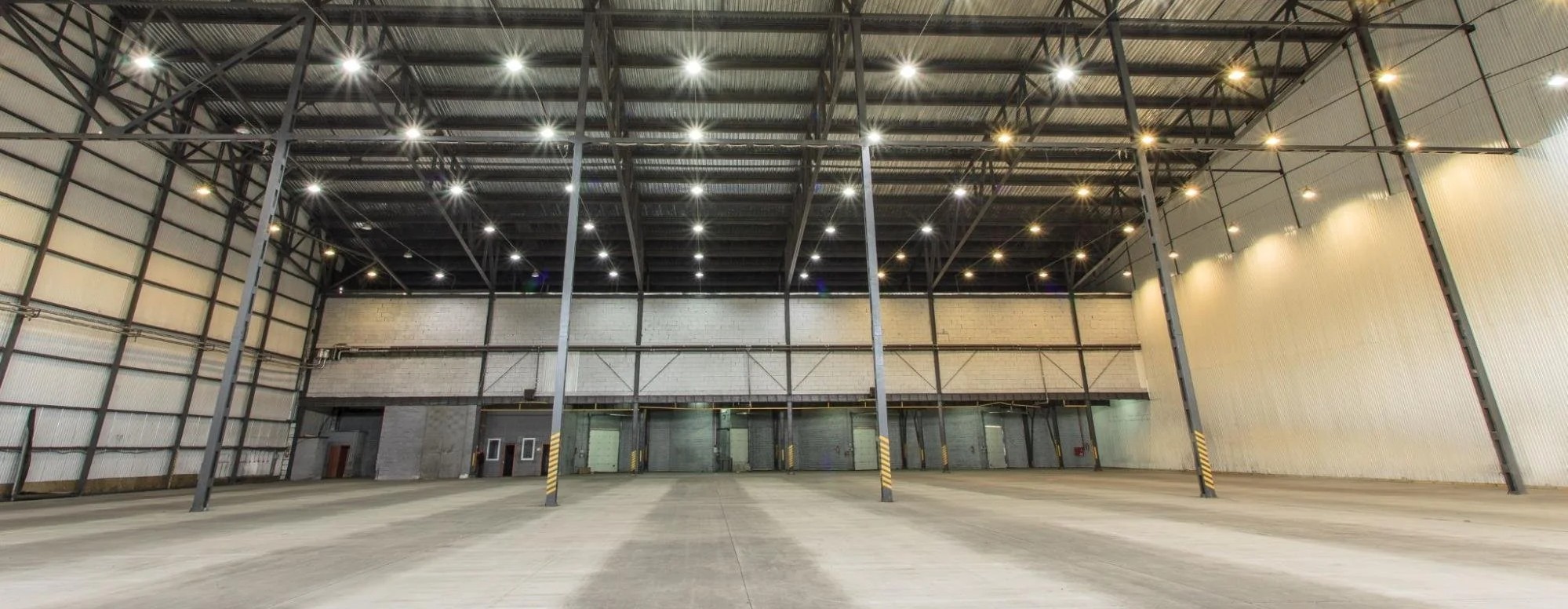
Properly designed LED lighting can create brighter, more consistent illumination and improve visibility throughout a commercial property.
That can make a noticeable difference in:
- Work areas
- Warehouses
- Retail displays
- Offices
- Parking lots
- Loading docks
- Stairwells
- Building entrances
The right lighting can make spaces feel cleaner, more modern, and more welcoming while helping employees, customers, and visitors see their surroundings more clearly.
4. Improved Workplace Safety
Good visibility matters in commercial and industrial environments.
Dark corners, poorly illuminated stairs, loading areas, parking lots, and production spaces can make it harder for employees and visitors to navigate safely.
Upgrading lighting can help improve visibility in areas where people are walking, driving, loading materials, operating equipment, or performing detailed work.
5. Less Heat
Traditional lighting technologies can produce a considerable amount of heat.
LED fixtures generally convert more of their energy into light rather than wasted heat.
In large commercial buildings with hundreds of fixtures, reducing the amount of heat produced by lighting may also reduce some of the cooling burden placed on the HVAC system.
6. More Control Over Your Lighting
Modern commercial lighting can do much more than simply turn on and off.
Depending on the system, businesses can incorporate:
- Occupancy sensors
- Daylight controls
- Timers
- Dimming
- Zoned lighting
- Automated controls
Instead of illuminating every part of a building at full output regardless of whether it's being used, controls can help businesses use lighting more strategically.
How Much Can a Business Save by Switching to LED Lighting?
There isn't one universal savings number because every building is different.
Potential savings depend on factors such as:
- Number of fixtures
- Existing fixture type
- Existing wattage
- New LED wattage
- Hours of operation
- Electricity rates
- Lighting controls
- Maintenance requirements
- Type of facility
For example, a warehouse operating high-bay lights for long shifts may have a very different savings opportunity than a small office that's open eight hours per day.
That's why a professional lighting evaluation is valuable.
Rather than guessing at savings, an electrician can evaluate your existing lighting system, determine its electrical consumption, recommend replacement options, and help you understand the potential impact of an upgrade.
Are There Georgia Power Rebates for Commercial LED Lighting?
Yes. Qualifying Georgia Power commercial customers may be eligible for rebates on certain energy-efficient lighting upgrades through Georgia Power's Commercial Energy Efficiency Program.
Current 2026 incentives include qualifying existing-building interior and exterior lighting upgrades. Eligibility and rebate amounts depend on the type of fixture, equipment selected, existing lighting, project requirements, and other program conditions.
Georgia Power currently requires qualifying existing interior and exterior lighting projects to achieve at least a 10% reduction in wattage. Eligible LED lamps and luminaires must also meet applicable ENERGY STAR® or DesignLights Consortium (DLC) qualified product requirements.
Rebate programs, eligibility requirements, and incentive amounts can change, so businesses should verify current program requirements before purchasing or installing equipment.
How Much Are Georgia Power's Commercial Lighting Rebates?
For qualifying 2026 existing-building projects, Georgia Power lists incentives on a per-fixture basis for several lighting categories.
Examples include eligible:
- LED troffer fixtures
- LED troffer retrofit kits
- LED can, track, pendant, and downlight fixtures
- LED stairwell fixtures with integrated controls
- Linear LED retrofit kits
- LED exit signs
- Other qualifying interior and exterior lighting
For the combination of prescribed upgrades that includes existing-building lighting, Georgia Power currently lists a maximum rebate of $100,000 per building per year, capped at up to 50% of equipment cost, subject to program requirements and available funding.
Because eligibility varies by project, businesses shouldn't assume that every LED product or installation will qualify.
Should You Apply for Rebates Before Installing LED Lighting?
It's smart to investigate rebates before purchasing equipment or beginning installation.
For its 2026 Commercial Energy Efficiency Program, Georgia Power states that preapproval isn't required but is highly recommended before equipment is purchased or installed.
Rebates are also subject to eligibility requirements, program funding, and other terms and conditions.
Planning ahead can help ensure the fixtures selected for your project meet the appropriate requirements and that the documentation needed for the rebate application is available.
Which Businesses Benefit Most From LED Lighting Upgrades?
Almost any commercial property with outdated lighting can potentially benefit, but LED upgrades can be especially attractive for facilities with a large number of fixtures or long operating hours.
Examples include:
- Warehouses
- Manufacturing facilities
- Distribution centers
- Office buildings
- Retail stores
- Restaurants
- Hotels
- Medical offices
- Apartment communities
- Schools
- Churches
- Parking garages
- Storage facilities
- Automotive facilities
Facilities with high ceilings or hard-to-reach fixtures may also see substantial maintenance benefits because LED lighting can reduce the frequency of lamp replacement.
What About Parking Lot and Exterior LED Lighting?
Don't overlook the outside of your property.
Older parking lot fixtures can consume significant amounts of electricity while providing uneven or inadequate illumination.
Commercial LED upgrades can be used for:
- Parking lots
- Building exteriors
- Walkways
- Loading areas
- Security lighting
- Entrances
- Pole-mounted fixtures
Better exterior lighting can improve visibility, enhance the appearance of your property, and reduce the maintenance associated with older lighting systems.
LED Retrofit vs. Complete Fixture Replacement: Which Is Better?
It depends on the existing fixture and your goals.
An LED retrofit replaces or modifies components within an existing fixture so that it can use LED technology.
A complete fixture replacement removes the existing fixture and installs a new LED fixture.
Retrofits can sometimes provide a cost-effective solution when existing fixtures are in good condition. Complete replacements may offer advantages when fixtures are outdated, damaged, inefficient, or poorly suited to the space.
There isn't a one-size-fits-all answer.
A commercial electrician can evaluate the condition of the existing equipment, desired light levels, energy goals, and available rebates to recommend an appropriate solution.
How Do You Know If It's Time to Upgrade Your Commercial Lighting?
Your business may be a good candidate for a commercial LED lighting upgrade if:
- You're frequently replacing bulbs or ballasts
- Your energy costs are increasing
- Parts of the building are poorly illuminated
- Lighting is inconsistent from one area to another
- Employees complain that work areas are too dark
- Your warehouse still uses older high-bay fixtures
- Parking lot lighting is dim or unreliable
- Fixtures take time to reach full brightness
- You're planning a renovation
- You want to improve your building's energy efficiency
Even if your existing lights technically still work, keeping outdated lighting may cost more over time than upgrading.
What Happens During a Commercial LED Lighting Upgrade?
A professional lighting project generally begins with an evaluation of the existing facility.
The electrician may consider:
- Existing fixture types and quantities
- Current wattage
- Hours of operation
- Light levels and coverage
- Areas where lighting could be improved
- Available electrical infrastructure
- Potential lighting controls
- Applicable rebate opportunities
From there, a lighting plan can be developed around the needs of the business.
Installation can often be scheduled in phases or around normal operating hours to help minimize disruption.
Commercial LED Lighting Upgrades in Savannah, GA
Rushing Electric has helped businesses throughout Savannah and Coastal Georgia with commercial electrical projects since 1972.
Whether you're replacing outdated office lighting, converting warehouse fixtures to LED, improving a parking lot, or upgrading lighting throughout an entire commercial facility, our team can evaluate your existing system and recommend solutions designed around your property and business needs.
We can help with:
- Commercial LED lighting upgrades
- LED retrofits
- Warehouse lighting
- High-bay lighting
- Parking lot lighting
- Exterior lighting
- Lighting controls
- Commercial electrical upgrades
- Electrical troubleshooting and maintenance
Still paying to power outdated lighting? Get Rushing.
Contact Rushing Electric to discuss an LED lighting upgrade for your Savannah-area business and learn whether your project may qualify for available energy-efficiency incentives.
Frequently Asked Questions
Are LED lights worth it for a business?
For many businesses, yes. LED lighting can reduce energy consumption and maintenance requirements while improving lighting quality. The potential return depends on the existing lighting system, operating hours, energy costs, and cost of the upgrade.
How much can a business save by switching to LED lighting?
Savings vary considerably from one property to another. The number and type of existing fixtures, wattage reduction, operating hours, utility rates, controls, and maintenance costs all affect potential savings. A lighting evaluation can provide a more accurate estimate for a specific facility.
Does Georgia Power offer rebates for commercial LED lighting?
Yes. Georgia Power currently offers rebates for qualifying commercial energy-efficiency projects, including eligible existing-building and new-construction lighting projects. Requirements and rebate amounts vary, and incentives are subject to program eligibility and available funding.
Do all LED lights qualify for Georgia Power rebates?
No. Eligibility depends on the specific program and equipment. For qualifying existing-building lighting projects, Georgia Power requires applicable LED replacement lamps and luminaires to be listed on the DesignLights Consortium or ENERGY STAR Qualified Products List, along with other program requirements.
Should I retrofit my existing fixtures or replace them?
It depends on the age and condition of your fixtures, the desired lighting performance, project budget, and available incentives. A commercial electrician can evaluate both options and recommend the most appropriate approach.
Can LED lighting be installed in warehouses and parking lots?
Yes. LED lighting is commonly used for warehouses, high-bay applications, loading docks, parking lots, exterior building lighting, and many other commercial environments.
Take Advantage of Georgia Power's SBES
Georgia Power's Make Ready Program, Rushing Electric can help your business qualify for valuable rebates up to 70% that significantly reduce installation costs.